


Thank you for visiting my blog. Much of this blog is dedicated to my passion for photographing the ever-changing palette at The Chicago Botanic Garden. I am fortunate to live within a few miles of this magnificent garden and I spend several days a week walking, observing and photographing the beauty this 385-acre slice of heaven offers. For me the beauty is in the details - the colors, the patterns, the tiny things that might otherwise be missed. Photography in general, but particularly nature and macro photography, teaches you to slow down and look at the world up-close, to observe the mysteries and wonders Mother Nature provides us.
"The contemplation of beauty causes the soul to grow wings." ~ Plato
Happy New Year
Wishing everyone a happy, healthy and photography-filled new year! 2014 has been a year filled with many opportunities and growth and I am very excited for what is to come in 2015! The end of the year is a time to reflect on the year gone by and to think about goals and hopes for the coming year. I am grateful to my family for all their support and encouragement as I pursue a passion that brings such joy to my life, and to the many, many friends I have met who have become a part of my photography family. I feel so blessed!
Holiday Lights at The Chicago Botanic Garden


 'Red Pearl' Amaryllis in the Semitropical Greenhouse at CBG

Flowers for the Holidays
The greenhouses at the Chicago Botanic Garden are transformed with lights and a variety of holiday flowers - brightly-colored amaryllis, poinsettias and kalanchoe. While Wonderland Express is going on, the greenhouses stay open until 6 p.m., well-past dark. It's fun to walk through them in the dark with the dramatic holiday lights. Photographing the flowers, however, requires daylight so go early enough to get good light. Just as the reality of another long cold Chicago winter is settling in, it's nice to have some beautiful flower subjects to photograph in the warmth of the greenhouses. The first round of amaryllis in the Semitropical greenhouse were the 'Pink Surprise' amaryllis. I'm glad I had a chance to photograph these beauties before they faded. They have since been replaced by a new deep red variety. They are just beginning to open and I hope to grab some time to photograph them tomorrow.
'Pink Surprise' Amaryllis

 Poinsettias were never a favorite flower of mine until I visited the Lincoln Park Conservatory a couple of years ago to see their holiday flower display. I was fascinated to learn that there are about 100 varieties of poinsettias in a wide range of colors. The red poinsettia is by far the most popular because of its association with Christmas. The poinsettia is part of the spurge family. The showy colored parts of poinsettias that most people think of as the flowers are actually colored bracts or leaves. The yellow flowers (cyathia) are in the center of the colorful bracts. Contrary to popular belief, the poinsettia is not poisonous. Since that visit I have enjoyed photographing the poinsettias at CBG and more fully appreciate their beautiful patterns and textures.


 For more about the holidays at The Chicago Botanic Garden be sure and read my article posted on outofchicago.com last week. The festivities at the Garden last until January 4th!
'Out of Chicago' Article - Capturing the Holidays at the Chicago Botanic Garden
Enjoy my latest article on outofchicago.com - Capturing the Holidays at the Chicago Botanic Garden. The Garden is a magical, beautiful place during the holidays. Bundle up and see for yourself!

The Science of Blue - How the Blue Morpho Tricks Us
As winter weather descends on the Chicago area, we are well-past the butterfly season at the Chicago Botanic Garden. The Butterflies and Blooms exhibit closed in early September and the Garden has already moved the mesh enclosure to its new location for next summer. While construction is going on at the Children's Learning Campus, the butterfly exhibit will be temporarily located in an open area along the east road of the Garden, just east of of the parking lots and south of McDonald Woods. Eventually a new, more permanent butterfly structure will be incorporated into the new Children's Learning Campus. I am thankful the Garden is keeping this wonderful exhibit going in its new location while the transition occurs. It is a highlight of summer for this butterfly enthusiast.
This morning I came across a fascinating article on NPR's website by Rae Ellen Bichell about the color blue in nature: How Animals Hacked the Rainbow and Got Stumped on Blue. In the article Bichell talks about one of the most magnificent examples of blue in nature, the Blue Morpho butterfly. The Blue Morpho is probably the most popular butterfly for visitors to the Butterflies and Blooms exhibit and it's easy to see why. Watching the Morpho fly about the enclosure one can see the shimmering blue of the Morpho's inner wings. As soon as the butterfly lands, she closes her wings and all one sees are the brown outer wings, which are beautifully patterned, but much less of a show-stopper as the glimmering blue. It's hard for us photographers to capture the resting Blue Morpho with wings open since they almost always rest with wings closed.
Most colors in nature - red, yellow, green - are chemical, or derived from pigment. Many animals take these pigments from the foods they eat and incorporate them into their outer structure, hence the pink color of flamingos (shrimp, crabs and algae) and the red breast of the robin (berries). Blue is the exception; it is actually rare for an animal to contain blue pigment. Bichell states, "of all Earth's inhabitants with backbones, not one is known to harbor blue pigment. Even some of the most brilliantly blue things in nature — a peacock feather, or a blue eye, for example — don't contain a single speck of blue pigment." Wait a minute...how do we explain the blue of the Morpho, the blue of a scarab beetle or the peacock feather? According to the article, it's a kind of a trick of nature, a structure or optical technology that has evolved that makes the butterfly or other creatures appear blue. The butterflies have "tiny transparent prism structures" on their wings that reflect light to make them appear blue. If you were to grind up the wings of a Blue Morpho butterfly, it would lose its reflective structure and the dust would be brown.
So next summer, when you see these beautiful creatures of nature fluttering about the enclosure, think of the science behind that blue. The evolution of color and the way animals incorporate it is a fascinating thing!


If you enjoy reading about the Butterflies and Blooms exhibit, read another recent post here.
Ten Tips for Photographing Butterflies
Link to podcast about Summer at The Chicago Botanic Garden and Butterflies and Blooms exhibit here.
The Last of the Waterlilies
Most of the colorful leaves have fallen, the mums and fall gardens have been pulled out to make way for bulb plantings and the aquatic pools in the Heritage Garden have all been drained at CBG. We have already had some snow flurries; winter is indeed around the corner. Last week I was able to capture one last waterlily before they were pulled out. Goodbye to another beautiful growing season; we now will bundle up to capture the winter landscapes and seek the warmth of the greenhouses in search of new things to photograph.
 A couple of weeks ago I was able to capture the fleeting beauty of the Longwood Victoria Waterlily, a special treat blooming in the Heritage Garden aquatic gardens. These waterlilies are particularly beautiful and interesting to observe. You have to watch carefully to catch the blooming of these jewels because they only last a couple of days. On the day before the plant blooms, a bud rises out of the water. At sunset of the first night the flower opens to reveal its glowing white petals. At this stage it is a female seeking to be pollinated. The Victoria's strong fragrance and glowing petals attract pollen-covered beetles. The beetles stay in the flower all night to feast on its nectar and at dawn the flower closes trapping the beetles inside to pollinate the flower. The fragrance disappears and at dusk the flower opens and releases the beetles. The Victoria is now a male and is pink in color. After this second night of blooming, the flower sinks into the water, allowing the seeds to mature. The Victoria is distinguishable by its amazing leaf pads. Each plant displays several large, round pads. The surface of the leaves are very delicate but the ribs and large thorns on the underside of the leaf help provide protection. I find these beautiful aquatic plants fascinating and watch them carefully late in the summer for blooms.

Nature's Display of Color
The fall colors have been at their peak this past week at the Garden. Between bright contrasty light and several days of gray, rainy weather, it's been hard to capture the colors at their best. On the days when landscape shots were less than ideal, I tried to capture some smaller, more intimate garden scenes, eliminating the grey sky altogether. I love the benches of the Garden and decided it would be fun to start a whole series of images of my favorite spots to sit in the Garden.

 The colors of the Japanese Islands are always beautiful. I love the many shades of green mixed with the reds, yellow and oranges of fall.

 One of my favorite views in fall is of Spider Island with its yellow birches and all the surrounding colorful maples. If the water is calm enough you get beautiful reflections in the water.

 I love that nature gives us this dazzling display of color before the whites and greys of winter appear. Even though we all complain about the long Chicago winters, I wouldn't trade the change of seasons - the exhilaration of spring and fall, the lushness of summer are all appreciated so much more after or in anticipation of a long winter. Winter brings its own unique beauty and peacefulness. Let's just hope it's not so bitterly cold this winter that we can get out and enjoy the beauty of winter. Meanwhile, I'll focus on enjoying every last moment of nature's bold display of color, the crispness in the air and the crunch of leaves under my feet.
This is the Week for Fall Color
If you want to catch the fall color at its peak, this is the week to get to the Chicago Botanic Garden! This photograph of the Circle Garden was taken late last week. I wanted to catch the Circle Garden at its glory with those beautiful, blazing maples as a backdrop. I love this view from the Circle Garden in the fall. I look forward to it every year. As you can see, there are still plenty of flowers and fall plantings to photograph but the real scene-stealers this week are the trees. Get there and enjoy the color!
Early morning in the Circle Garden

Fall Unfolding
Hello, October! Fall is quickly unfolding here in the Chicago area. The maples in my yard are turning brilliant colors of red, orange and yellow and other trees will soon follow. The predictions indicate that there will be a brilliant show of color this year and peak color should hit around mid-October.
 As the colors of fall unfold, I become more and more interested in capturing the colors in landscape shots, seeing the bigger picture. My usual focus on close up or macro photography begins to shift. While we are waiting for the colors to more fully emerge, however, I still have my head in the flowers. There are many beautiful flowers still in bloom at The Chicago Botanic Garden. One of my favorite late bloomers is the Japanese Anemone.
 This anemone was captured in the English Walled Garden using a wide aperture of 3.2. It's a flower that works well captured in a softer focus way. Another little surprise of fall is the Autumn Crocus. We expect to see crocuses in the early spring, one of the first flowers to emerge in March and April, but it's always fun to anticipate the appearance of the lovely, soft little crocuses of fall. The Graham Bulb Garden has been full of them. This one was captured after its morning watering, again with a wide aperture of 4.5, focusing on the water droplets on the outer petals.
 The water lilies and lotuses have continued to bloom in the Heritage Garden and the Graham Bulb Garden but they will soon be gone as the colder weather approaches.

 Last but not least, the dahlias in the Bulb Garden are continuing to bloom and will be beautiful to photograph until the first significant cold snap. Last fall I was photographing beautiful dahlias one day at the Garden, the temperature dropped that night and frost appeared, and when I returned to the Garden for more shots the next day, the dahlias were completely limp and faded.
 This past weekend at CBG the Central States Dahlia Society had their annual show. The room was filled with 100's of varieties of dahlias, of all colors and sizes. It was a flower photographer's dream...well, except for one thing - the lighting was dismal. Because it was too crowded to use a tripod I was forced to photograph at high ISOs and shoot at wider apertures to allow more light into the lens. If life gives you lemons, make lemonade...right?! I used this opportunity to do a lot of softer focus images.


 One of the few higher aperture images I had success with.

First Day of Fall
Today marks the first day of fall and it definitely feels like fall in Chicago. There is a pleasant chill in the air, the trees are beginning to change and the fall gardens have been planted at Chicago Botanic Garden. We know fall has arrived when the mums, asters, cabbages, kale, and colorful grasses begin to replace the summer flower gardens. I look forward to capturing the colors, patterns and textures of the season in the coming weeks. The mum display in the Crescent Garden is particularly colorful this year.

A Labor of Love
Happy Labor Day to all! I'm spending this rainy Labor Day catching up on a long overdue blog post, continued processing on the many photos I've shot over the summer, not to mention a much-needed cleaning out of my photo files to make room for lots of new files as fall approaches. Today marks the last day for the Butterflies and Blooms exhibit at CBG, another sign that summer is almost over. It has truly been a labor of love to spend time each week photographing in the exhibit. Unlike the previous two years where the plant life and the butterflies began to wane slightly about mid-August, this year the exhibit has remained lush and full of new butterflies until the very end. We had a cooler than usual August this summer and just enough rain to keep everything blooming and beautiful. A bit of warmer weather two weeks ago encouraged the final emergence of many new butterflies in the pupa emergence room. Patrick and staff had their biggest release of the summer - about 75 butterflies released in one day - so there were plenty of beautiful butterflies to photograph until the very end. Spending time with these magical creatures, learning about new species and watching their behavior remains one of the highlights of summer photography for me. This summer I was able to share that magic with the many people who signed up for our very successful private butterfly shoots through the Out of Chicago community.
Large Tiger Butterfly
 Flame Bordered Charaxes - a real stunner!
 Emerald Swallowtail or Banded Peacock - always a favorite among visitors and photographers.
 Tiger Longwing on colorful Lantana
 Male Mocker Swallowtail - the Mockers remain one of the most fascinating of species for me. Read a bit about them here.
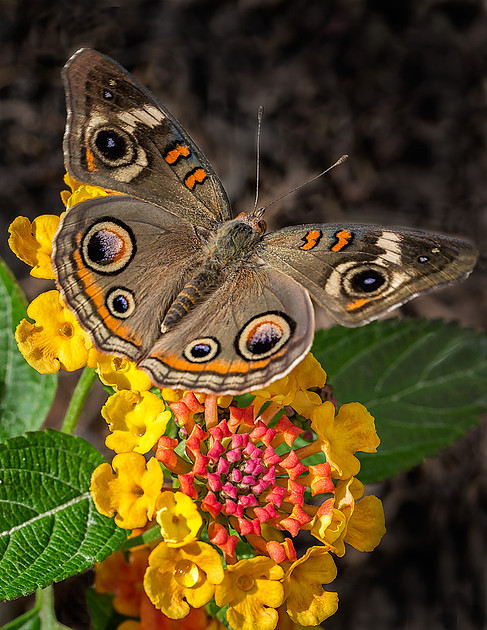
 Beautiful patterning of the Buckeye, a butterfly sometimes seen in our region
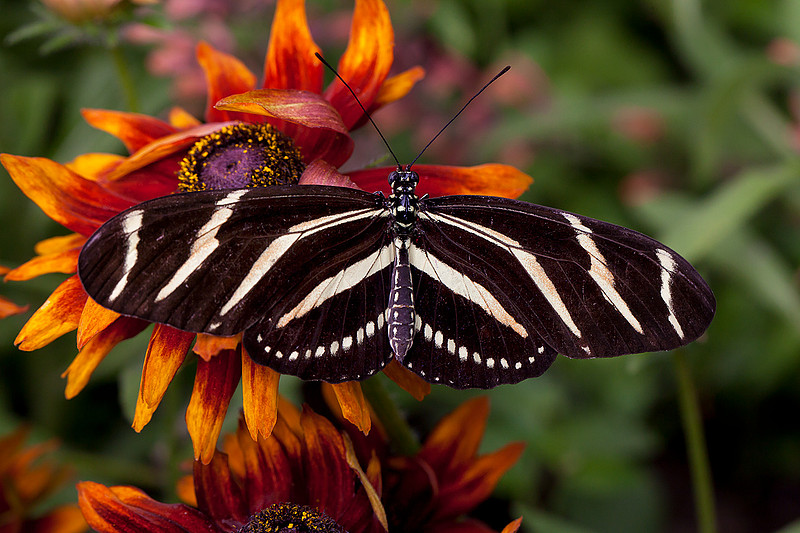
 And lastly this Zebra Longwing is dedicated to one of my favorite people in the world, Courtney Quigley. It is her favorite butterfly and she loves it because it is so familial - always flying and resting in a group or family. I am so sad that Courtney has recently left CBG and her job as Exhibition Manager, but happy for her and her family to begin a new and exciting adventure living in Spain as her husband takes a Navy assignment there. Courtney is one of those special people I have met and feel a great connection with - her passion, energy, intelligence and positive view of the world make her a delight to be around. It was such a pleasure to work with her on the 'Nature in View' exhibit for the Garden Photographic Society, my work with the butterflies, and other projects that Courtney and I have collaborated on. She will be dearly missed at CBG by so many people and I know there won't be a time I walk the grounds of the Garden without thinking of her. Thank you, Courtney, for your friendship, your support and your belief in my work...and thank you for sharing your passion for butterflies with me. I know our paths will continue to cross - you are not to be forgotten. If you haven't listened to the podcast Chris Smith and I did with Courtney this summer at the Garden, don't miss it here. Courtney was a wonderful ambassador for the Garden and her knowledge about the natural world is beyond impressive.
10 Tips for Photographing Butterflies
This past two weeks Chris Smith and I have organized and run two private photo shoots at the Butterflies and Blooms exhibit at the Chicago Botanic Garden for the 'Out of Chicago' community. I came up with a list of 10 tips for shooting butterflies in the exhibit but many of these tips can also be applied to shooting butterflies in your home gardens or outdoors at CBG. My butterfly garden at home has been busy with monarchs feeding on the milkweed and Tiger Swallowtails enjoying the butterfly bushes. I was able to capture this beautiful Tiger Swallowtail yesterday.

10 Tips for Photographing Butterflies
-
Take a few minutes to look around and observe the butterflies when you enter the exhibit. You will quickly learn which flowers are most popular and begin to anticipate where they might land and where some butterflies like to hang out. In the early morning they are less active making them easier to photograph. Watch each and every step you take; butterflies love to rest on the path and have even been seen mating on the path!
-
Look for butterflies without damaged or tattered wings and those resting on flowers. Include the flower in your composition.
-
If you have Image Stabilization on your lens, use it if hand-holding!
-
Use aperture priority so that you can change your aperture quickly as the situation demands. With my 100mm macro I find that f7.1 - f11 are usually the best apertures to get the whole butterfly in focus but keep the background blurred. If I am including a flower in the photograph and need more depth of field to get the flower in focus, I will increase the aperture number accordingly. It will take some experimenting to get to know what apertures work best with your lens.
-
Make sure your shutter speed is high enough to avoid blurring if you are hand-holding your camera. You may have to increase your ISO to accommodate a higher shutter speed with the appropriate aperture. You are also allowed to use flash within the exhibit if you want to use it to illuminate the butterfly or darken your background.
-
Hold your camera parallel to the entire length of the butterfly to ensure getting the eyes, body and wings in focus. I move my focus point to the head/eye of the butterfly. This is the most critical part to have sharply in focus. Don't forget to make sure the antennae are included in your shot.
-
Pay attention to your background while composing your shot. Sometimes moving a tiny bit will eliminate a bright spot or create a less distracting background.
-
If you are using a macro lens move in close and do some close-ups of the head, eyes and proboscis or the patterns on the wings.
-
Experiment with catching butterflies in flight and dreamier shots with wide apertures.
-
Don't forget to check out the action in the pupa emergence room window. You might catch a butterfly emerging from its chrysalis or a butterfly with its underside pressed up against the glass.
Article on Photographing Aquatic Blooms at CBG
 Enjoy my latest article on outofchicago.com