


Thank you for visiting my blog. Much of this blog is dedicated to my passion for photographing the ever-changing palette at The Chicago Botanic Garden. I am fortunate to live within a few miles of this magnificent garden and I spend several days a week walking, observing and photographing the beauty this 385-acre slice of heaven offers. For me the beauty is in the details - the colors, the patterns, the tiny things that might otherwise be missed. Photography in general, but particularly nature and macro photography, teaches you to slow down and look at the world up-close, to observe the mysteries and wonders Mother Nature provides us.
"The contemplation of beauty causes the soul to grow wings." ~ Plato
Photographing Orchids
I know my blog posts have been few and far between this fall and winter but my 365 project photographing patterns and textures has kept me quite occupied each and every day. It has been challenging to find subjects to shoot during this bitterly cold winter we are having, but I am enjoying the project immensely and it has spurred so much growth for me. More on that later. Starved for flowers to shoot this time of year I have developed an interest in photographing orchids, which are full of interesting patterns and textures and readily available this time of year. There are a number of places in our area to shoot orchids - the Tropical Greenhouse at the Chicago Botanic Garden, Lincoln Park Conservatory and, best yet, Hausermann's, a huge supplier of orchids in Villa Park, just south of O'Hare airport. Last week I visited Hausermann's with my photo friend, Tony Reynes, and we had a wonderful time shooting many different orchids from all over the store. It is a huge greenhouse with 1000's of orchids of every variety. Their prices are reasonable if you want to purchase orchids to bring home to shoot and enjoy, as well.
In 3 weeks the big Orchid Show will open at the Chicago Botanic Garden. It runs from February 15 - March 16 and promises to be a spectacular display of orchids. Regenstein Center, the Greenhouses and Greenhouse Gallery will all be filled with 10,000 beautiful and unusual orchids. The exhibit is open from 10 a.m. to 4 p.m. daily and admission is $8 for members/$10 nonmembers. For more information on the show visit the CBG website http://www.chicagobotanic.org/orchid. The Garden is also offering a two session class on February 20 and 27, Photographing Orchids, taught by Linda Oyama Bryan. Check it out at http://www.chicagobotanic.org/school/botanical_arts. (Just a note - the greenhouses will have very limited public access from Jan 27th until the opening of the show while staff is busy setting up.)
Orchids are difficult to photograph for a number of reasons. Indoors the lighting can be challenging - glass greenhouses can have bright contrasty light and orchid shows are often in darker rooms with limited light. Because they grow in clusters and in close proximity to other orchids or flowers, it is hard to isolate the orchid from others and eliminate distracting backgrounds. If I choose to shoot orchids with every part in sharp focus, I use a very small aperture, going as high as f25 depending on how much I need in focus. Apertures this high require a tripod which is not always easy to maneuver in a small space or greenhouse. Using a black backdrop is ideal but not always appropriate when photographing orchids outside of home. A flash, powered down and held off camera can be helpful in both illuminating the inner structure of the orchid and darkening the background. It is often hard to find a good composition for an orchid or grouping of orchids. Take your time and experiment. As with anything, the more you practice and experiment, the better you will get.
Here is a favorite from a recent trip to the Lincoln Park Conservatory - a Lady Slipper Orchid.
 In this second image of the same orchid, I darkened the background in post processing which accentuates the orchid but, unfortunately, makes it feel like it is floating, but I do like the drama it creates.
 This is an orchid grouping taken recently in the Tropical Greenhouse at CBG.
 An orchid close-up using a shallower depth of field and hand held at CBG
 Some beauties I captured at Hausermann's this week..


 I bought this orchid at Hausermann's and brought it home to shoot. I love that the grouping shows orchids in all stages of development, from tightly
closed bud to fully open flowers.
 It is beautiful to shoot orchids with a very shallow depth of field, as well. I stopped at the Butterfly House, part of the Missouri Botanical Garden, during a recent trip to Missouri and photographed this Japanese Tree Orchid in such a way.

Lastly, here's a wild and crazy close-up of a Lady Slipper

Happy Holidays and Happy New Year
Warmest wishes for a happy holiday season and a happy 2014! If you haven't had a chance to visit the greenhouses or Wonderland Express at the Chicago Botanic Garden, the holiday exhibits will be up until January 5th. It's warm inside and the displays are beautiful!

Holiday Amaryllis Display
Many people do not visit the Garden in the winter months but the Greenhouses are in full bloom year-round and are a wonderful place to visit and photograph during the cold winter months. The Greenhouses are all decked out for the holidays and Wonderland Express is open and drawing its usual crowds in Regenstein Center. Each of the three greenhouses has its own holiday personality. The Tropical Greenhouse is full of several varieties of poinsettias and has spectacular orbs of poinsettias hanging from the ceiling. The Arid Greenhouse has pots of beautiful red Kalanchoe Blossfeldiana. In the Greenhouse Gallery area holiday trees have been constructed out of bromeliads - a sight not to be missed. CBG staff members have created beautiful holiday wreaths also on display in the Greenhouse Gallery. The stunning displays of Amalfi Amaryllis in the Semitropical Greenhouse, however, are my personal favorite.


Fall at the Chicago Botanic Garden - New Post on "Out of Chicago"
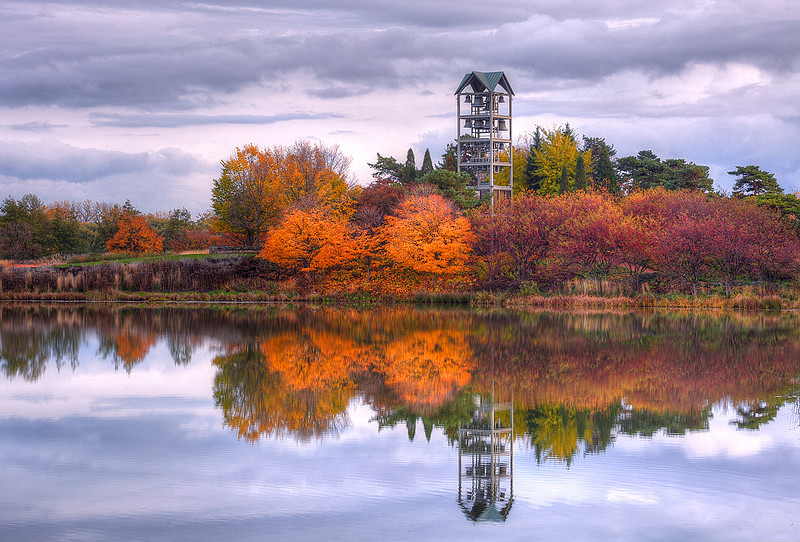 I have a new article "Fall at the Chicago Botanic Garden" posted on the Out of Chicago website today. Take a look and enjoy the fall colors!
http://outofchicago.com/fall-at-the-chicago-botanic-garden/
Sunrise at Chicago Botanic Garden
On Saturday the Garden held a sunrise photo walk. I had never been to one of the Garden's monthly photo walks even though I'm a huge fan of Robin Carlson, the Garden's staff photographer, who leads the walks. The regular walks are usually held at 9 a.m. on the first Saturday of the month and are known to draw huge crowds. I know my way around the Garden quite well and prefer to shoot on my own or in small groups. I decided to try the sunrise walk, however, thinking it would only draw a hardy few willing to meet at 5:45 a.m. About 20 of us hardy souls gathered and walked to the grassy knoll overlooking the Japanese Gardens. It was still quite dark when we got there but gradually the sky began to take on beautiful color and light up. It was so peaceful and exhilarating to watch the clouds, the colors of the morning sky and finally the sun peek from behind the tree line. A wonderful experience and one that I hope the Garden repeats. The first three shots were 5 exposures each combined in HDR software, Photomatix, with additional processing in Lightroom and Photoshop. The last image is only one exposure processed in Lightroom and Photoshop.


Kasha-Katuwe Tent Rocks National Monument
While the Garden is in transition between summer and fall, I thought it would be fun to feature some posts about my travels over the summer. Several dear friends from high school and I spent a week in Colorado and Santa Fe in August. I had visited Santa Fe previously and fell in love with the culture, the arts, the food and the land. One quickly learns that the air, the sky, the light are different in New Mexico. It is no wonder artists like Georgia O'Keeffe were drawn there and called it home after experiencing the seduction of New Mexico. Georgia O'Keeffe said, "It's something that's in the air - it's different. The sky is different, the wind is different." Georgia O'Keefe is without a doubt my favorite artist; her work has deeply influenced my photography. It is no wonder I would be awestruck by the place she called home for the later years in her life. One of my favorite places near Santa Fe to hike - one of my favorite places in the world - is Kasha-Katuwe Tent Rocks National Monument. Kasha-Katuwe means "white cliffs" in the traditional Pueblo language Keresan. Tent Rocks is located about 40 miles south of Santa Fe. To get there you drive through tribal land that is still occupied by the ancestors of the Pueblo de Cochiti. It was designated a national monument in 2001 and up until then it was relatively unknown. The first time I hiked at Tent Rocks we saw only a few other people on the trails. This time it was much more crowded but it did not detract from our experience of this magnificent place. The Canyon trail is a 1.5 mile trek into a narrow canyon with a steep 630 foot climb to the mesa top for breathtaking views of the Sangre de Cristo, Jemez and Sandia Mountains and the Rio Grande Valley. It is not a difficult hike at all but one does have to take into account the heat in the summer as well as the altitude and prepare with plenty of water. It is best to hike Tent Rocks in the morning before it is too hot and the possibility of afternoon storms might hamper your plans. Flash floods in the slot canyons are not uncommon, as well as lightning strikes on the canyon walls. I limited my camera gear to a small backpack and used my 24-105mm lens exclusively. A tripod would have been nice for doing some HDR shots but I did not want the extra weight because of the heat and climb.
As you begin the trail you are greeted by the cone-shaped tent rock formations that are the result of volcanic eruptions that occurred 6 to 7 million years ago. Perched on many of the "hoodoos" are boulder caps that protect the softer pumice and tuff below. The sky is an unbelievable shade of intense blue and the clouds on this particular day were the very typical New Mexico clouds I have come to love.

The layering of volcanic material resulted in the bands of gray, beige and pink-colored rock formations. Wind and water have eroded these deposits over time creating the canyons, arroyos and unique formations that make Tent Rocks an interesting outdoor laboratory for the study of geologic processes.


 Narrow slot canyons are part of the trek through Tent Rocks and offer a respite from the hot sun and a nice cool breeze.
 As you climb to the top of the mesa you are greeted by this magnificent view looking down into the canyon.


 At the mesa top, which is 6,800 feet above sea level, you can see the beautiful views of the Sangre de Cristo, Jemez and Sandia Mountains and the Rio Grande Valley. It's nice to sit on a rock and take it all in before you begin the descent back down. You go back down the same trail you come up on, so you get to enjoy it all again in reverse.
This photo of my friend Joan pretty much sums up the exhiliration of the views, the climb, being under that glorious New Mexican sky!

The End of Summer
Labor Day has come and gone and summer is winding down. There are hints of Fall in the air. This past week I took a couple of early evening walks at the Garden. The temperature was cool and the light beautiful. I was reminded that Fall is approaching and the days are getting shorter when I walked through the Visitor's Center at 7:00 p.m. one night and heard the person at the desk say to someone, "the Garden closes in 45 minutes at sunset." All summer we have had the luxury of staying at the Garden as late as 9:00 p.m. Despite the signs that Fall is approaching, the summer gardens are at their glory - lush and beautiful, filled with butterflies and bees. I am trying to savor every last bit of summer and all its flowers because I know it is only a matter of days/weeks until the summer gardens will be pulled out and the Fall gardens installed. I do love Fall but it is always bittersweet to say goodbye to summer.
The Crescent Garden is especially beautiful right now.


I have taken so many photographs of zinnias and dahlias this summer. They have been especially beautiful this year. I love photographing them from all different angles. A few of these I posted on my 365 project blog because the patterns and textures were so striking. There is a colorful mix of zinnias called 'Candy Scabiosa Mix' planted in the center of the Circle Garden surrounding the fountain and I particularly love photographing this type of zinnia. This white zinnia is among them and I captured it in the glow of early evening light.

And this one was bent at the stalk and turned upside down revealing it's unique patterns.

Perfect little dew drops on this dahlia were the result of getting to the Garden early one cool morning.


A Dahlia in the Bulb Garden soaking up the last bit of sun in the evening.

A colorful dahlia in the English Walled Garden.

Another sign that summer is over is the closing of the Butterflies and Blooms exhibit. I enjoyed visiting this exhibit almost every week this summer and helping the staff document all the butterflies. I was able to make one last visit before I left on vacation in late August. Congratulations to the the Garden on another successful year with the exhibit. I will certainly look forward to its reopening next summer!
A Large Tiger Butterfly - I especially love the yellow tips on its antennae.

An Emperor Swallowtail

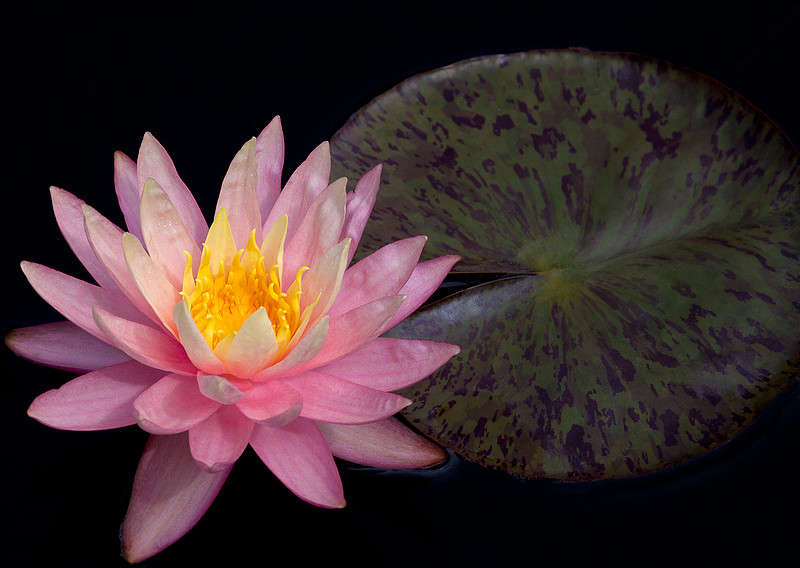
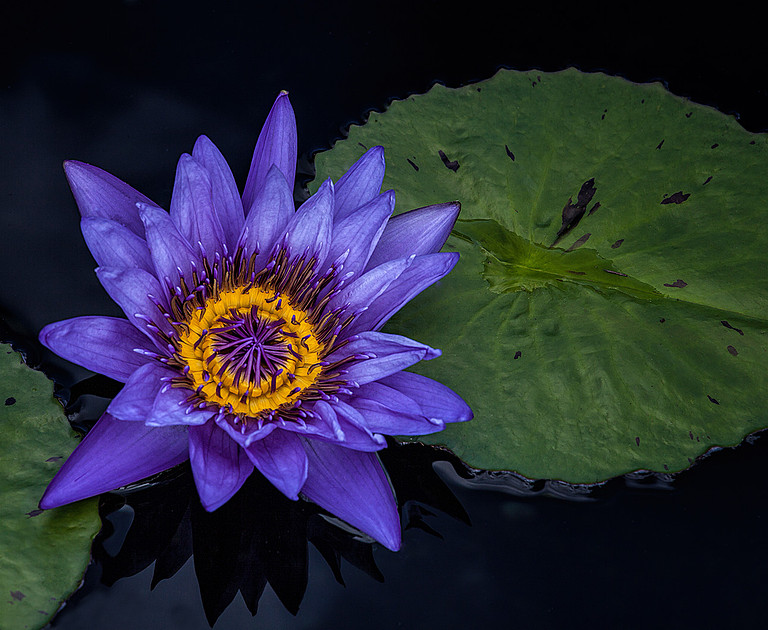
Waterlilies and Lotus Flowers in the Heritage Garden
In the summer I always look forward to the start of the blooming season for the waterlilies and lotuses in late June and early July. The displays have been particularly beautiful in the Heritage Garden. There are also waterlilies and lotuses in the Aquatic Garden by the Bulb Garden but those displays have not done well this year and many of the blooms have already been pulled out. The Heritage Garden has had many different types of water lilies and lotuses in a variety of colors, all healthy and beautiful. The waterlilies typically open mid-morning and stay open until late afternoon. It is important to shoot waterlilies in more subdued light, which is more difficult to get mid-day. I try to wait for days with good cloud cover. I use my 70-200mm lens to get in as close to the flowers as possible and try to shoot the flowers from many different angles. With the right light, proper exposure and a good angle you can darken the water, eliminating distracting details and leading the eye right to the main subject, creating a portrait with more impact and emotion. When shooting I am constantly checking for highlights and blown out areas and use exposure compensation to adjust my exposure as needed. Including the beautiful patterned lily pads and reflections in the water make for a more interesting portrait.




The Circle Garden
One of my very favorite gardens at the Chicago Botanic Garden is the Circle Garden. The Circle Garden, named because its outer boundary forms a circle, features a dancing fountain in the center and four identical beds of flowers in each corner. There are two secret gardens connected to the central gardens by curved arbors. Each season the plantings of the Circle Garden change. Spring brings beds of colorful tulips and mixes of annuals, scrubs and flowering trees. The summer plantings are bold and colorful - tall sunflowers, canna lilies, zinnias, dahlias, snapdragons, rudbeckia and salvia, to name a few. It is lush and bursting with every color of the rainbow. The hummingbirds and butterflies frequent these gardens in the late summer. When fall arrives the beds will be full of mums, marigolds, decorative cabbages, grasses and other fall plantings. It is a garden that never disappoints; in fact, it will take your breath away. It is equally fun to photograph the variety of flowers up close or put on a wide angle lens and capture the beauty of the whole garden.
Zinnia

Dahlia with early morning dew

Bold and colorful dahlia


Coreopsis


Dahlia

A Few More Butterflies
Tuesday morning is my favorite time to visit the butterfly exhibit and see what's new. Kay and Linda, the volunteers who tend the plants before the exhibit opens are busy at work and always helpful and enthusiastic about pointing out butterflies and sharing plant information. I have learned so much about the butterflies and the plants they love. I've been donating many of my butterfly images to the Garden for use in the exhibit and for the note cards sold online. Check out the note cards and invitations on the CBG website and order a set (here)! You can custom pick from many different images.
Here a few of the butterflies from my last couple of visits.
The always-beautiful Lacewings...


A Blue-Spotted Charaxes

A Scarlet Mormon

A Great Yellow Mormon

A Pink Rose

A Silver-Spotted Flambeau

Early Morning Dew Drops
Two mornings in a row I met my friend Tony Reynes at the Garden to shoot at 6 a.m. We had so much fun the first day, we vowed to come back a second day. Tony has always been a morning person and I'm slowly but surely learning the wonderful advantages of coming to the Garden early in the morning...with a little help from a cup of coffee to get me going. Very few people other than staff and a few early walkers are at the Garden at 6 a.m. The light is yummy and, because it was cooler on the two mornings we photographed, the dew on the flowers and plants was gorgeous. There was mist on the lake, the birds were singing their hearts out and it was so peaceful and quiet. Perfect! Here a few of the dew-laden beauties I captured.
A hibiscus in the Heritage Garden...


A freshly watered 'Apple Blossom' dahlia in the Bulb Garden.


Bloodflower bathed in dew in the Enabling Garden.

A zinnia with tiny beads of dew in the Circle Garden.

New Butterflies at the Butterflies and Blooms Exhibit
In my last post about the Mocker Swallowtails (here) I commented about how hard it was to photograph these butterflies with their wings open so you might see the variation in the female's patterning. I went back to the exhibit later in the week and was able to get a few shots of the female.

Here is a resting closed female, but you can see a hint of the inner wings to see the bright orange variation. They are such fascinating butterflies in their ability to mimic up to 14 other species.

During last week's visit with the butterflies, I hit the jackpot in catching a Blue Morpho with wings open. They rarely rest with their wings open but this one was not only posing for me, but chose a most beautiful setting of primary colors to show off its blue coloring.

A new species to the exhibit is the Crimson Banded Black, a beautiful butterfly.

One of the most beautiful butterflies, new this year, is the Chinese Yellow Swallowtail.

The exhibit is full of Zebra Longwings.
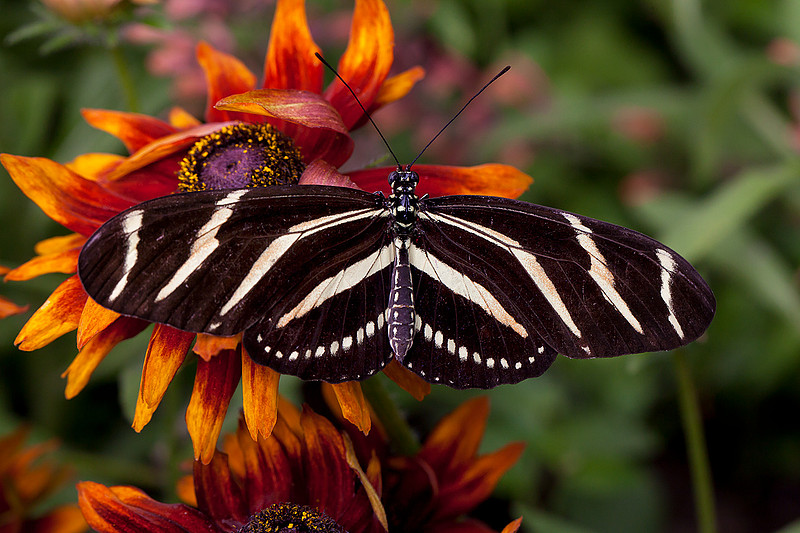
The Banded Peacock, also known as the Emerald Swallowtail, is another beauty.

A tiny but colorful butterfly that had just emerged last week is the Orange Emigrant.

A Doris Longwing

I've been having fun catching butterflies from different angles; this Gulf Fritilary didn't mind the close encounter with my macro lens.

and a Mormon...

a Lacewing...
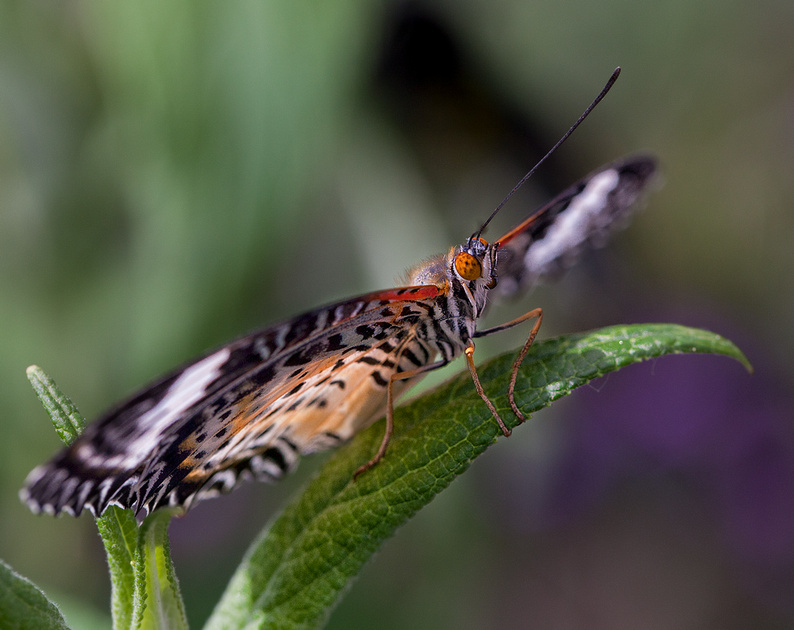
and a Golden Helicon...

Lastly, I never tire of photographing the Paper Kites. Last week they were sitting quietly in the serviceberry tree among all the colorful berries.

